Your Cart
Total:
$0.00




 December 23 2025
 Heavy items are hard to push if the wheels fight you. Light duty casters solve that problem with easy starts and smooth stops. Choose smart, and mobility improves without a big spend.
This guide walks through caster wheels, load capacity, and wheel types. You will see simple steps to match wheels to your space and surfaces. The right choice saves time, cuts noise, and protects floors.
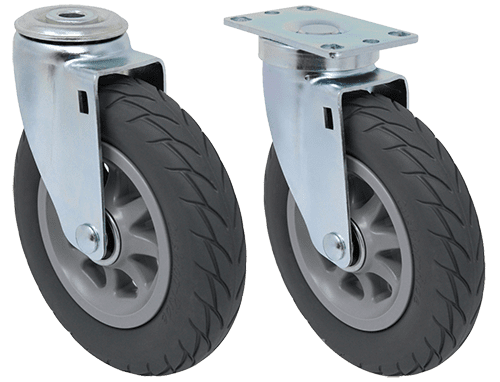
Light duty casters are small wheel assemblies that support lighter loads. They fit furniture, carts, displays, and compact equipment. Typical uses include office chairs, shop racks, and point of sale stands.
Two core styles exist. Swivel casters turn 360 degrees for quick direction changes. Rigid casters roll straight for control and tracking.
Wheel materials shape performance. Rubber is soft and gentle on floors. Polyurethane resists wear and carries more weight without leaving marks. Phenolic is a hard resin that resists chemicals and heat, but it can be noisy on tile or concrete.
Match the wheel to your floor, speed, and load. If unsure, Caster City offers help at 800-501-3808. A short call can confirm the safe load and best material for your mobility needs.
Light duty casters come in several shapes and mounting options, each type supports unique mobility solutions. The right choice helps boost maneuverability, increase accessibility, and improve rolling performance for many furniture and industrial needs.
Swivel Casters
Swivel casters give carts and equipment smooth mobility. The top raceway turns, so the wheel rotates in any direction. This helps in aisles, labs, or tight offices with frequent course changes.
Common wheel choices include rubber and polyurethane. Both protect floors and reduce noise, which keeps shared spaces quiet. Many models include a brake or a directional lock for steady parking or straight-line control.
Uses include medical carts, retail displays, and office furniture. For light loads that require high maneuverability, this style keeps movement easy and safe.
Rigid Casters
Rigid casters do not swivel. They hold a fixed path for straight rolling. That adds stability on transport carts, toolboxes, and support frames.
Materials range from rubber to polyurethane to steel tread wheels. The best pick depends on the floor and load capacity goal. A toe brake can hold a cart still during setup or loading.
Rigid casters often pair with swivels. Two rigid and two swivel casters balance tracking and steering. Under shelves or worktables, rigid units offer reliable, simple movement.
Stem Casters
Stem casters mount with a stem at the top. A threaded stem screws into a socket. An expanding rubber stem tightens inside a tube or leg.
They suit light equipment that sees frequent moves, like small medical carts and office stands. Caster City supplies both threaded and expanding rubber stem options.
Wheel materials include phenolic, resilient rubber, polyurethane, polyolefin, and steel. Each material trades off grip, noise, weight rating, and chemical resistance. Call for help if load capacity or fit is unclear. A quick spec review prevents misfits and early wear.
Light duty caster wheels offer many mobility solutions for simple tasks, keep reading to see how the right choice can boost rolling performance and accessibility.
Enhanced Mobility
Good casters make movement feel lighter. Swivel units handle quick turns. Rigid units track straight with less steering effort.
Caster City, operating since 1977, offers quality parts for smooth motion. You can select brakes for safer loading and parking. Wheel choices help reduce sound for quiet operation in offices and clinics.
Quick, easy rolling saves time each shift. Less strain also lowers injury risk. Replacing worn wheels restores mobility and protects floors.
Durable and Lightweight
Light duty wheels stay tough without adding bulk. Polyurethane and rubber handle daily bumps and debris. The assemblies are compact, so pushing loads stays simple.
That blend supports clear gains in uptime. Teams move racks or carts faster. Less wheel failure means fewer service stops.
Cost-Effective Solution
Light duty casters cut costs by matching performance to actual needs. You avoid paying for heavy industrial casters that go unused. Installation takes little time, which reduces labor hours.
With the right load rating and surface match, service life improves. Fewer replacements mean lower total cost. The result is dependable mobility at a smart price.

Choosing the Right Light Duty Casters means looking at many factors, wheel type, mobility needs, and environment. With a quick review of your application, you can boost rolling performance and meet your mobility solutions with ease.
Assess Load Capacity
Load capacity is the safe weight a caster can carry. Start by adding the total weight of the cart or furniture plus the heaviest load. Divide by the number of casters.
Then add a safety margin of 25 percent or more. Loads rarely spread evenly. Uneven floors can overload a single wheel.
Example: A 200 pound bench and 300 pounds of tools equals 500 pounds. With four casters, 500 divided by 4 equals 125 pounds per caster. Choose at least 160 pounds per caster to cover uneven loads.
Consider Wheel Material
Wheel material affects speed, floor care, and noise. Rubber cushions shocks and is quiet on tile or wood. Phenolic supports higher loads and resists chemicals, but it can mark floors.
Polyurethane balances grip, wear, and floor protection. It works well in offices, labs, and packaging lines. Steel wheels handle heat and rough surfaces, but they can harm soft floors.
Match material to surface compatibility and cleaning needs. This choice boosts durability and protects your space.
Evaluate Application Requirements
List the key needs before you buy. Consider these checks for a fast sort:
Pick the smallest wheel that carries the load without floor damage. Larger diameters roll easier over gaps and cables. Verify fastener size and spacing before ordering to speed installation.
The right light duty casters make movement safe and simple. Proper caster wheels raise rolling performance and protect floors. Swivel, rigid, and stem styles cover most needs, from furniture wheels to light industrial casters.
Focus on load capacity, wheel material, and your surface. Add brakes where safety matters. If you need guidance or customizable casters for a unique setup, Caster City can help you choose parts that fit.
Good mobility supports uptime and reduces strain. Choose with care, and everyday moves get easier, quieter, and faster.


December 9 2025