Your Cart
Total:
$0.00



 October 7 2025
 Moving heavy equipment safely depends on more than strong wheels. Without brakes, carts drift, shop stands roll, and hospital beds slide. Brakes for casters hold equipment steady so work can be done without risk. Choosing the best brakes for casters depends on how much weight you need to carry, what type of floor you roll across, and how much control your job site requires.
Safety and stability:
Maneuverability and control:
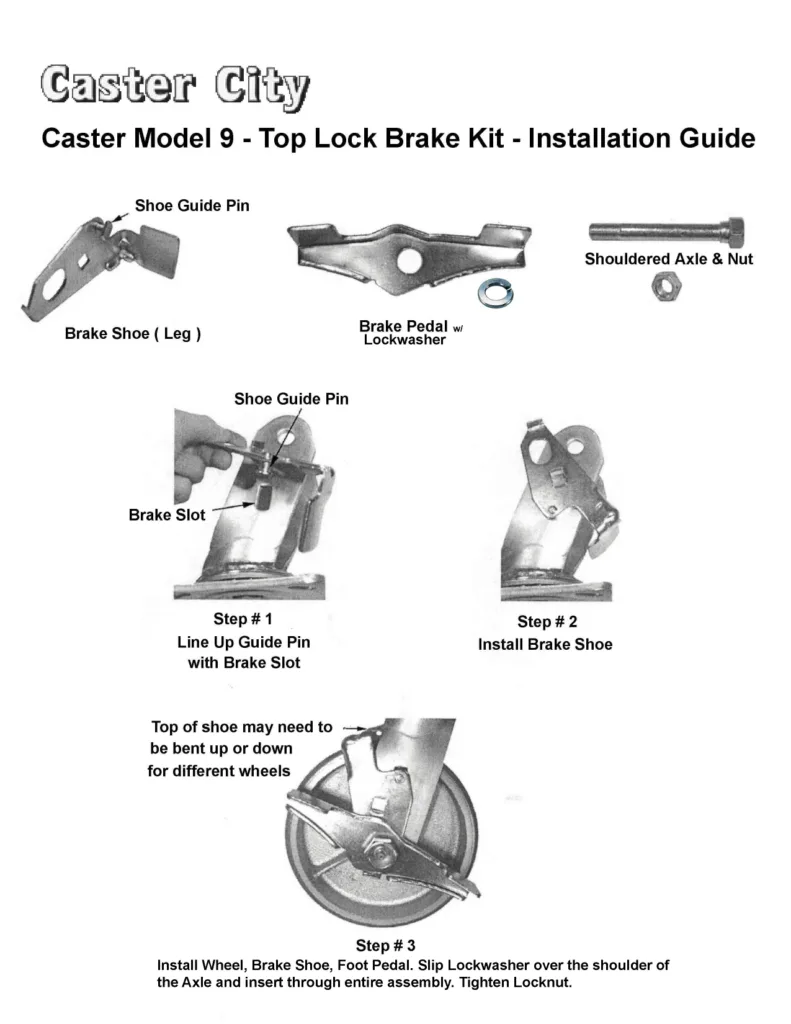
Top lock brake casters use a metal brake shoe that clamps against the wheel tread. Once engaged, the wheel cannot roll. Many designs also lock the swivel, which is the turning joint above the wheel. That stops both rolling and rotating at the same time.
Top lock brake casters are found across many industries because they give simple control with easy foot operation. Common uses include:

There are two common types of top lock brake casters, each serving a different need:

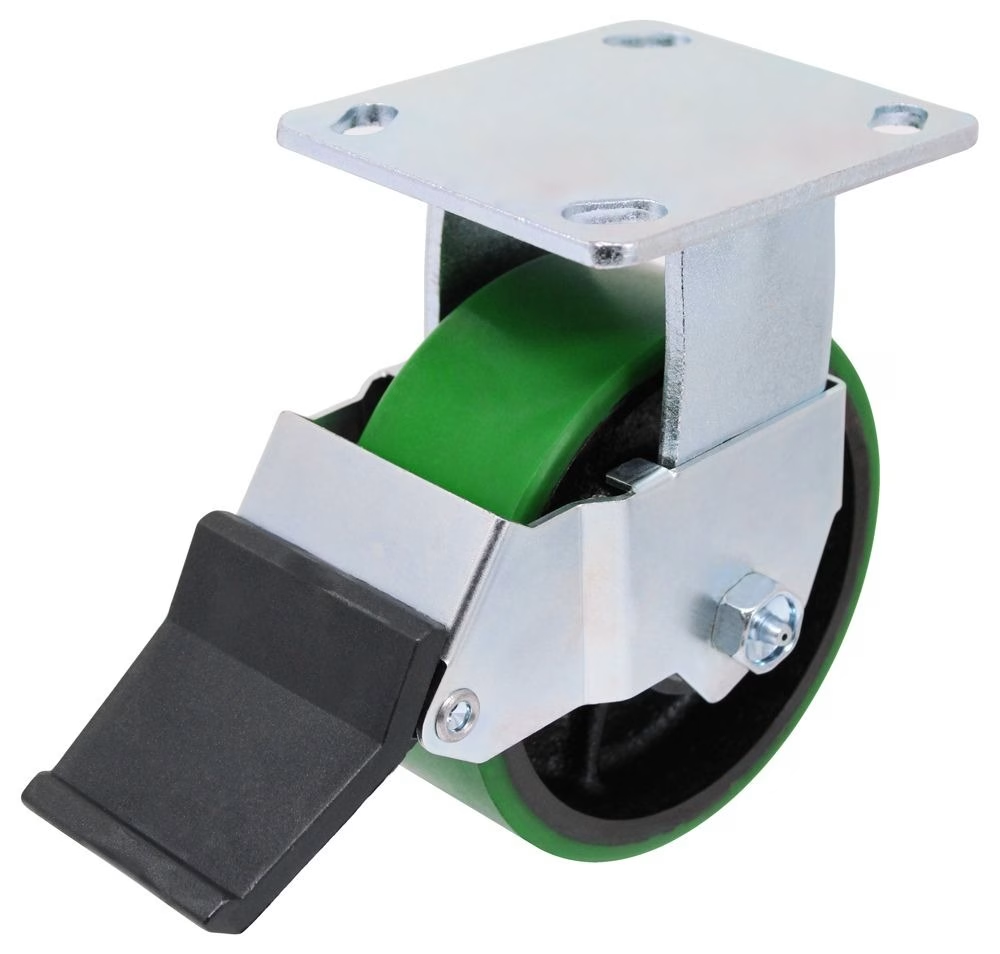
Industrial casters are not one-size-fits-all. Options include:
When comparing, remember that total locking plate casters give the highest stability and are considered the best brakes for casters in demanding environments.
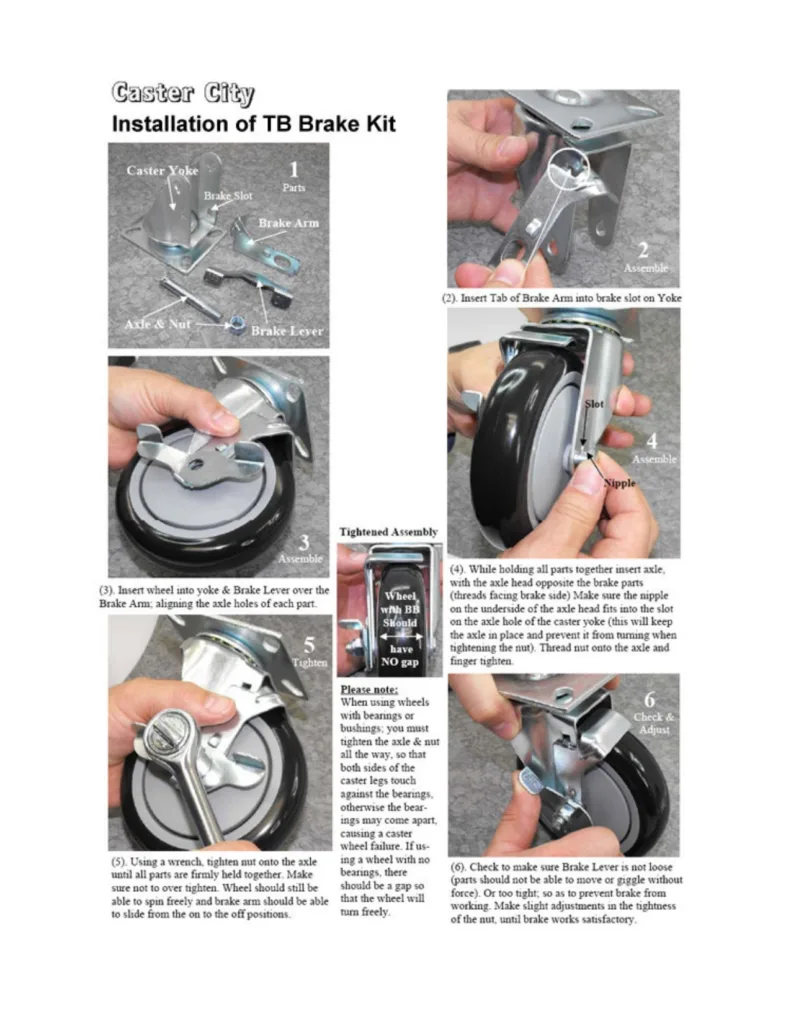
Total lock brake casters secure both the wheel and the swivel at the same time. When the brake is engaged, the wheel cannot roll and the caster cannot rotate. This creates a stable platform that stays firmly in position, even when equipment is pushed from different angles.
Total lock brake casters are commonly used in applications where safety, precision, and stability are critical. Typical uses include:
There are two common types of total lock brake casters depending on the mounting method and application requirements:
Total lock casters are often the better choice when equipment must remain completely stationary while in use. Unlike top lock brakes, which primarily stop wheel movement, total locks prevent both rolling and swivel movement for improved control.
They are especially useful when:
For applications that require the highest level of caster control, total lock casters are often considered the most effective braking solution available.
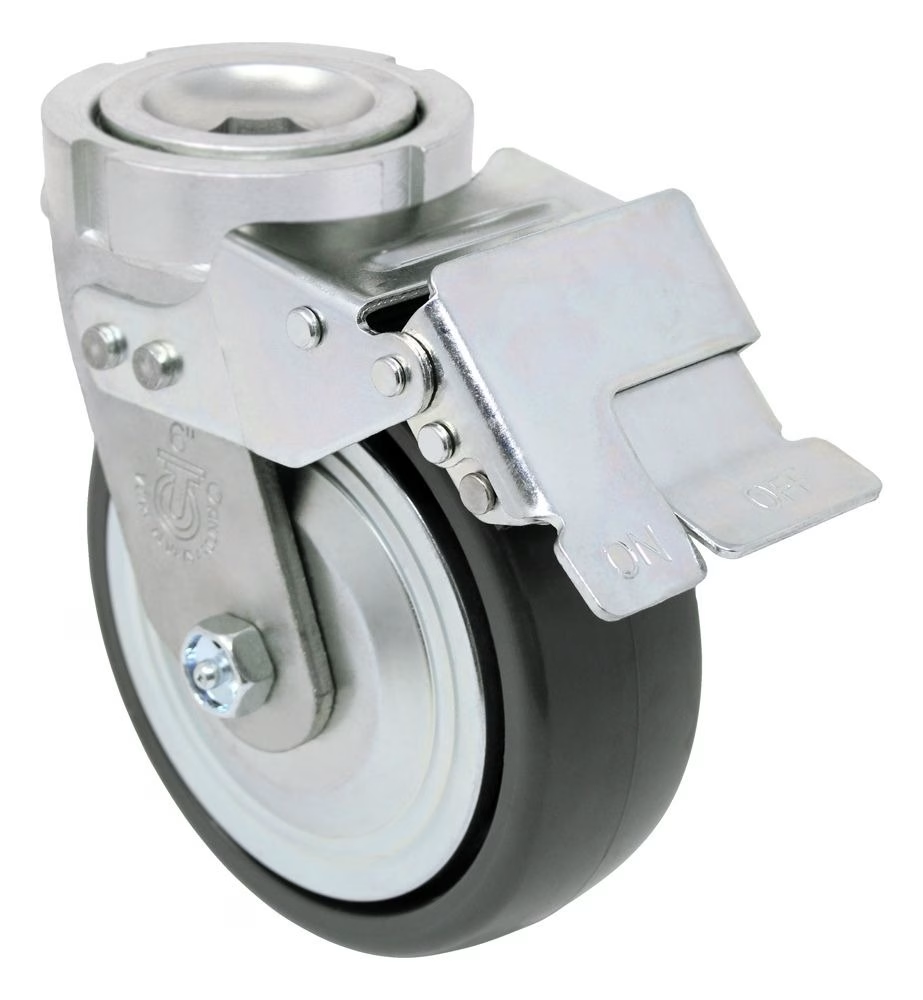
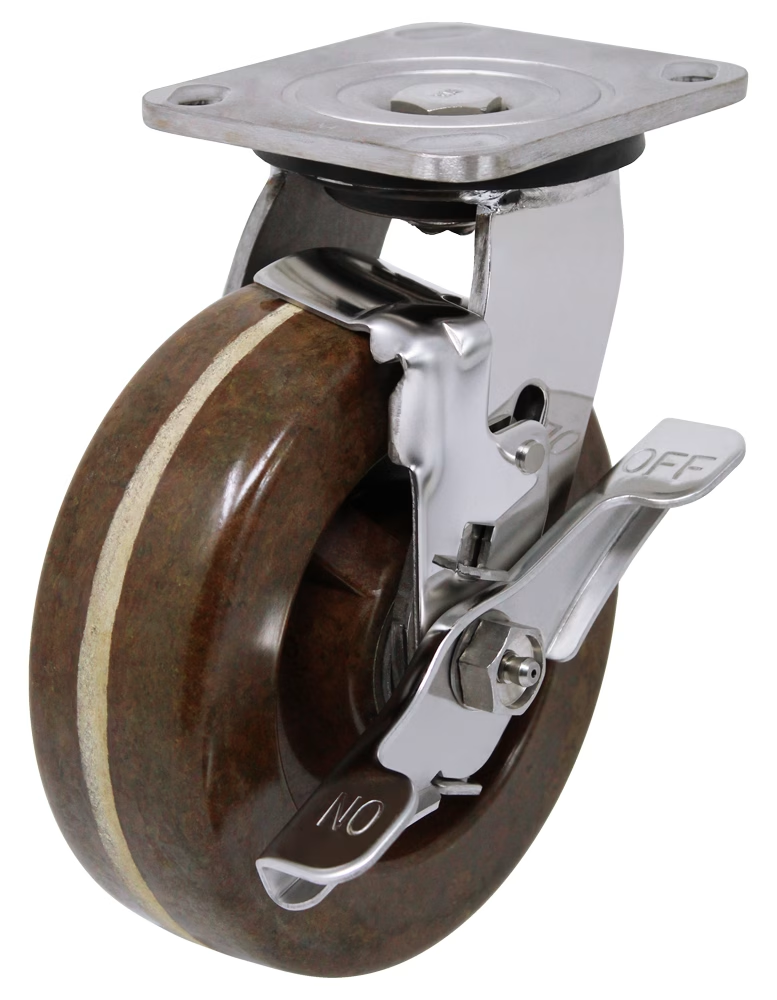
A top lock brake stops the wheel from rolling but may still allow the caster to swivel. A total lock brake secures both the wheel and swivel simultaneously. Total lock casters are usually preferred for medical equipment, industrial workstations and heavy mobile equipment where maximum stability is required.
While top lock brakes stop the wheel, total locking casters hold both the wheel and swivel at the same time with one action. This adds an extra layer of safety for the heaviest equipment.
| Feature | Top Lock Brake | Total Lock Brake |
|---|---|---|
| Stops wheel rolling | Yes | Yes |
| Stops swivel movement | Sometimes | Yes |
| Stability | Good | Excellent |
| Industrial workstations | Good | Excellent |
| Medical equipment | Good | Excellent |
| Heavy loads | Good | Excellent |
| Safety level | High | Very High |
For jobs that need the best brakes for casters, total lock systems are often the answer. At Caster City you can find options like:
At Caster City, one of the most common mistakes customers make is choosing a brake based only on wheel size. In practice, floor conditions, load weight and swivel control often have a bigger impact on safety and performance than wheel diameter alone.
Weight capacity:
Floor type:
Mounting:
Since 1977, Caster City has supplied high-capacity casters, wheels, and brakes for every type of industry. Their online selection makes it simple to filter by load rating, wheel material, and brake type. Expert staff are available by phone at 800-501-3808 to guide you through selecting total locking plate casters, top lock brakes, or stainless steel caster options.
Always follow site rules when using industrial casters. Wear protective equipment and block heavy gear before performing service or repair. The best brakes for casters keep workers safe, but safe handling practices must always be followed.
Top lock brake casters improve control and stop rolling equipment where safety matters most. For maximum hold, total locking plate casters and total locking stem casters keep both wheel and swivel from moving.
Focus on three points when choosing brakes for casters:
With the right casters, workbenches, hospital carts, and warehouse racks roll when needed and stay put when locked. A careful choice today leads to smoother operations and lower costs tomorrow.