Your Cart
Total:
$0.00



 January 6 2026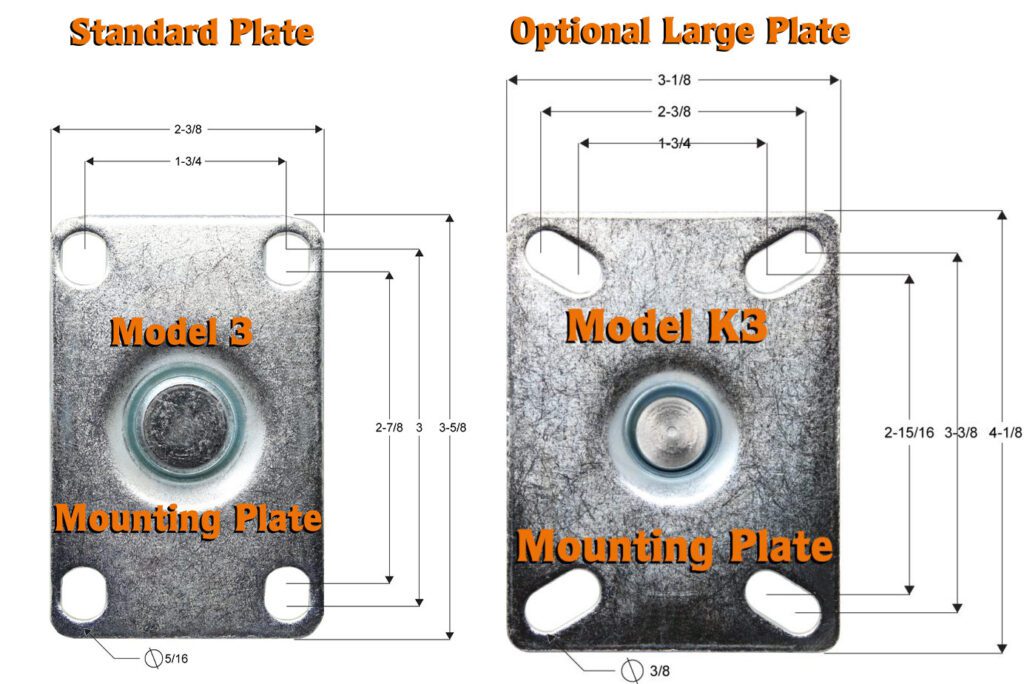
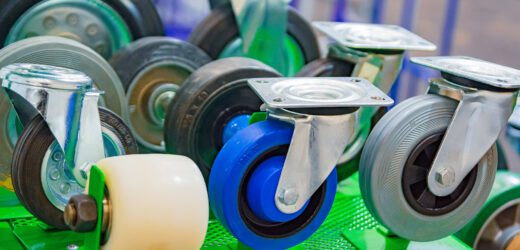
Plate mount casters save time, protect floors, and keep loads moving with control. A flat mounting plate bolts to a cart, rack, or machine and spreads force across a wide area. That wider footprint keeps the joint stable, lowers push force, and reduces wobble under weight. The result is smoother rolling, safer stops, and fewer failures.
A plate mount spreads load over the full steel plate and bolt pattern. This helps when the payload is tall, the route is rough, or the cart sees frequent stops and starts. If you need a compact plate with real strength, review the sizes in Plate Caster Model 3. For higher loads and thicker forks, many teams move up to Plate Caster Model 9.
Swivel casters turn 360 degrees. They shine in tight aisles and around equipment feet. Rigid casters track straight and add stability on long runs or ramps. The most common mix is two swivels and two rigids. Start there unless your route is all turns or all straight lines. For a strong swivel in a compact plate, compare the options in the G15 plate series.
A wheel brake stops the wheel. A total lock stops both the wheel and the swivel for a firm hold during loading, tool changes, or service work. Total lock is the safer choice on slopes, dock plates, or when a tall rack must not drift.
The wheel controls grip, floor care, and noise. Match the tread to the surface.
Capacity is not a guess. Add the item weight and the heaviest expected contents. Divide by the number of casters. Then add a safety margin of at least 25 percent to handle bumps, starts, and turns.
Example: A 1,200 pound workbench on four casters needs at least 300 pounds per caster. With a 25 percent margin, select 375 pounds or higher per caster.
For heavier builds or tall loads with a high center of gravity, step up in frame class. Many shops start with Plate Caster categories to filter by load rating, tread width, and diameter. If you need quick help, call 800-501-3808 and a specialist will size it with you.
A correct plate size spreads force and keeps the swivel smooth. Check bolt hole spacing, plate length and width, and the clearance to nearby parts. Thick tops and wide bolt patterns resist racking forces from side hits. The G15 pattern is a popular 4 by 4.5 inch footprint in the G15 plate series for medium to heavy service.
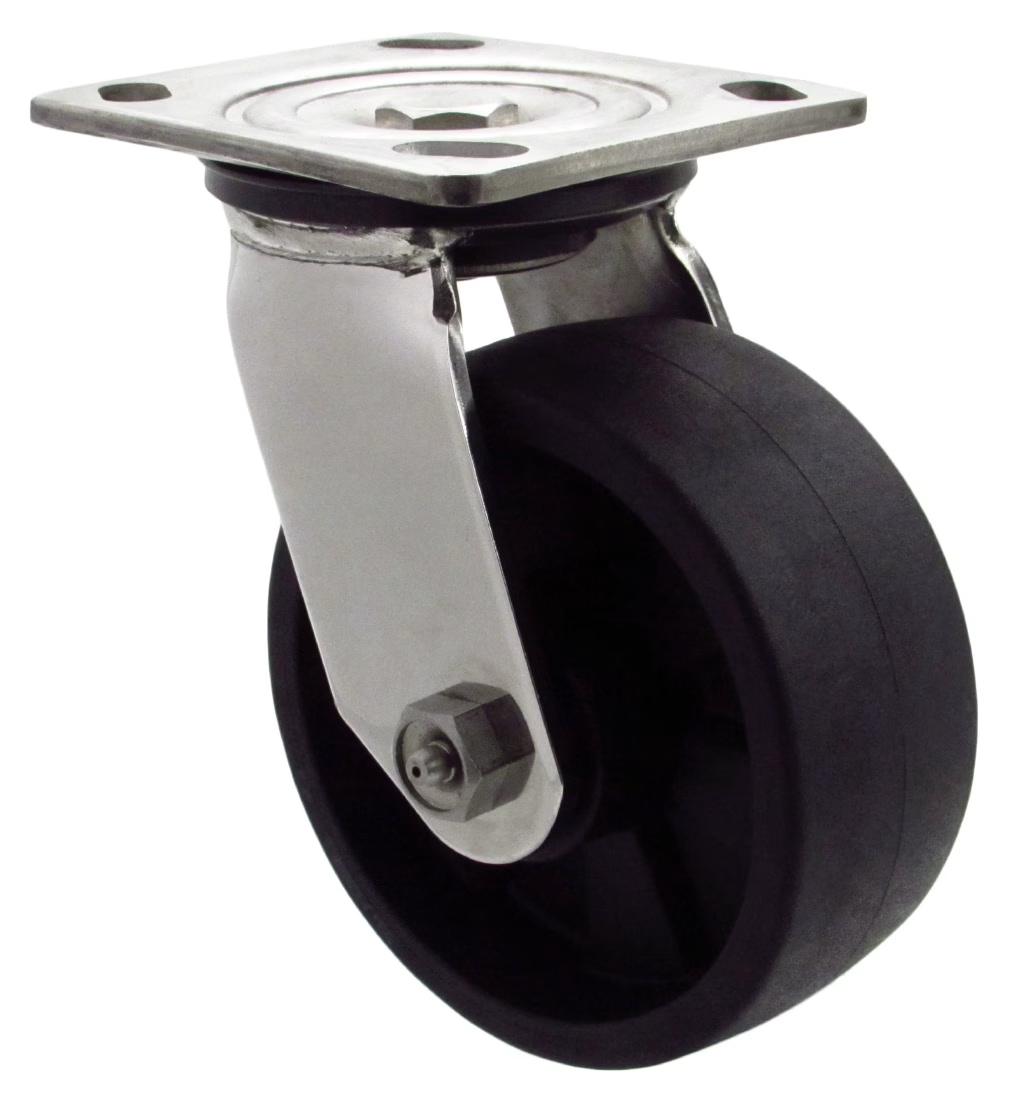
Bigger wheels roll over gaps and cords with less effort. Wider treads spread weight and lower floor stress. On long routes, a larger diameter can cut push force by a wide margin. If your team fights starts and stops, test a one size up diameter on a single cart and measure the change in push with a gauge.
Wheel and swivel bearings change how a cart feels.
Grease fittings on the swivel and wheel hubs extend life and keep the turn smooth. Set a quick lube schedule by hours of use, not just by calendar.
Moisture, cleaners, and salt will attack plain steel. Use stainless hardware and sealed bearings for washdown or coastal sites. For true outdoor or marine duty, review the corrosion proof builds in the Stainless Steel 316-9 family. If you roll across wet docks, a stainless plate plus polyurethane tread is a proven mix.
Dual wheels double the contact patch without raising the plate height. That wider stance lowers push force, helps on cracks and thresholds, and keeps tall racks tracking true. If a single wheel flattens under stops, move to a dual polyurethane like Model 2-9 dual wheel to spread the load.
Not every cart needs the same frame.
If you are converting from a stem mount to a plate, verify top plate space and reinforcing. If you are unsure about bolt spacing, call 800-501-3808 and we will match your hole pattern.
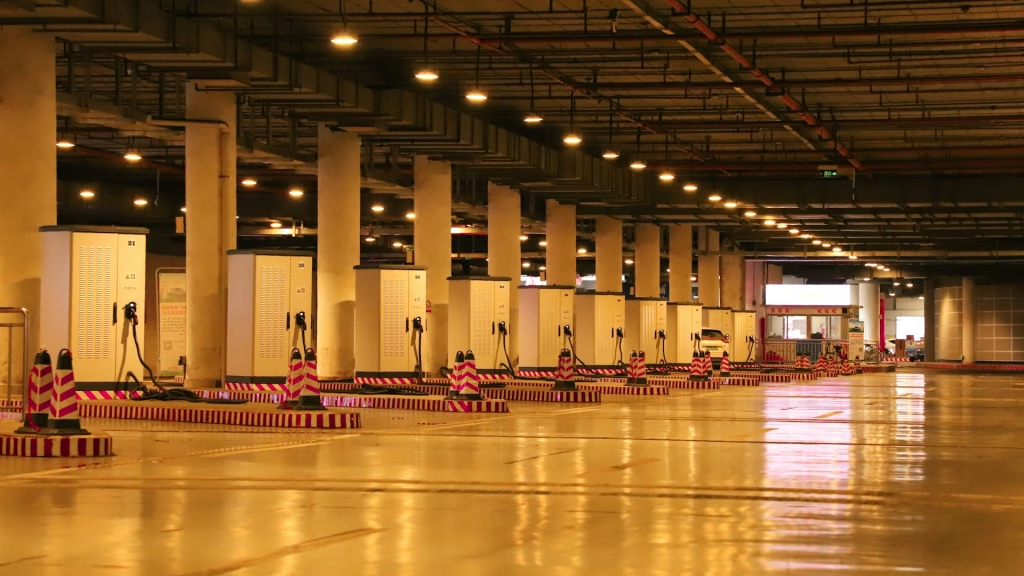
Pick the wheel for the floor, not the other way around.
If you split time between smooth floors and thresholds, consider a larger diameter in a medium hardness polyurethane and check results on a pilot cart.
Raise the wheel and you raise the deck height. That extra height can help clear hoses and cables, but it also raises the center of gravity. Keep tall loads wide and consider dual wheels. If a tower cart sways, widen the base or select a lower overall height with a wider tread. When in doubt, ask engineering to confirm tip limits.
To compare frames and treads in one place, start at the Plate Casters catalog. If the route includes wet or corrosive zones, cross check with the 316 stainless lineup. If push is still high, step to dual wheel polyurethane for wider contact.
If you face heat, chemicals, or constant shock loads, get a second set of eyes. A short call to us at 800-501-3808 can verify the frame class, tread blend, and bearing set before you place an order. You can also compare against known fits in Model 3 and Model 9 to speed approval.
Since 1977, Caster City has helped teams move more with less effort. We stock plate mounts, dual wheels, and stainless builds, and we also engineer custom casters for unique frames and floor conditions. If the standard catalog does not match your hole pattern, we can guide you to a plate that fits or quote a custom top plate. Start with the plate casters catalog and call 800-501-3808 for fast sizing help.


December 9 2025